










Teltonika Industrie Dual 5G/LTE Router für professionelle Anwendungen, Digitale I/Os
The Teltonika RUTM52 is an industrial dual 5G/LTE router with digital I/Os, designed for high-availability connectivity in demanding environments. It combines two 5G modules with multi-WAN load balancing and automatic SIM failover to ensure maximum network availability and throughput. With integrated digital I/Os and support for industrial protocols such as OPC UA and MODBUS, it is ideally suited for IoT and M2M applications.
- Dual 5G Modems
- Two 5G Sub-6 GHz modules with SA/NSA, up to 3.3…
- Multi-WAN & Load Balancing
- Simultaneous use of multiple WAN connections wi…
- 4G LTE Cat 20 Fallback
- Seamless fallback to 4G with up to 2.0 Gbps dow…
- Dual SIM & eSIM
- Two physical SIM slots plus eSIM with up to 7 p…
Description
Key Highlights at a Glance
- Dual 5G Modems: Two 5G Sub-6 GHz modules with SA/NSA, up to 3.3 Gbps downlink and 900 Mbps uplink.
- Multi-WAN & Load Balancing: Simultaneous use of multiple WAN connections with automatic load balancing and failover.
- 4G LTE Cat 20 Fallback: Seamless fallback to 4G with up to 2.0 Gbps downlink when 5G coverage is unavailable.
- Dual SIM & eSIM: Two physical SIM slots plus eSIM with up to 7 profiles, automatic SIM failover on signal loss, data limit, or roaming.
- Wi-Fi 5 Wave 2: Dual-band 802.11ac with MU-MIMO, up to 867 Mbps and 150 concurrent clients.
- 5x Gigabit Ethernet: One WAN and four LAN ports with 10/100/1000 Mbps, Auto-MDI/MDIX.
- Industrial Protocols & I/Os: OPC UA, MODBUS, DNP3, DLMS/COSEM, and digital inputs/outputs for automation.
High-Availability Mobile Connectivity
The RUTM52 is equipped with two independent 5G modules supporting both SA and NSA architectures. Each module achieves up to 3.3 Gbps downlink (4x4 MIMO) and 900 Mbps uplink (2x2 MIMO) in 5G operation. For areas without 5G coverage, a powerful 4G-LTE Cat-20 fallback with up to 2.0 Gbps downlink is available. The multi-WAN functionality allows simultaneous use of both mobile connections and a wired WAN port, with intelligent load balancing and automatic failover ensuring maximum availability.
Two physical SIM slots and an integrated eSIM (consumer type, up to 7 profiles) provide flexible connectivity options. The SIM switch mechanism automatically responds to weak signal, data limit, SMS limit, roaming, network loss, or connection drop, ensuring uninterrupted connectivity. Additionally, carrier whitelists/blacklists, band locking, and SIM PIN management can be configured.
Industrial Protocols and Data Integration
The router supports a variety of industrial communication protocols, including OPC UA (Client/Server), MODBUS TCP (Server/Client with custom registers), DNP3 (Station/Outstation), and DLMS/COSEM (Client). These protocols enable seamless integration with PLCs, SCADA systems, energy meters, and other automation components. The integrated Modbus-MQTT gateway allows command and data exchange between MODBUS servers and MQTT brokers.
For data forwarding, HTTP(S), MQTT, and Azure MQTT are available. The Data-to-Server function extracts parameters from various sources and protocols and sends them bundled to a central server. Custom LUA scripts enhance flexibility. Digital I/Os enable direct control and monitoring of machines and sensors.
Comprehensive Security and VPN
The RUTM52 offers a wide range of VPN protocols, including OpenVPN (27 encryption methods), IPsec (IKEv1/v2, 14 ciphers), GRE, PPTP, L2TP, Stunnel, DMVPN, SSTP, ZeroTier, WireGuard, Tinc, and Tailscale. This variety enables secure site-to-site connections, remote access, and scalable IPsec VPNs. A TPM 2.0 chip serves as a trusted hardware security base for authentication and key storage.
The integrated firewall allows port forwarding, traffic rules, and custom rules. Protection mechanisms against DDoS attacks (SYN flood, SSH/HTTP/HTTPS attacks) and port scans are also included, as well as VLAN tagging, 802.1X client support, and flexible access controls for SSH, web interface, and CLI. Authentication can be done via pre-shared keys, digital certificates, TACACS+, or internal/external RADIUS servers.
Specifications
| Mobile Module | 2 x 5G Sub-6 GHz SA/NSA 2.1/3.3Gbps DL (4x4 MIMO) 900/600Mbps UL (2x2 MIMO); 4G (LTE): DL Cat 20 2.0Gbps (4x4 MIMO)/UL Cat 20 200Mbps; 3G: 42 Mbps DL, 5.76Mbps UL |
| 3GPP Release | Release 16 |
| eSIM | Consumer type eSIM, profile download and removal operations, up to 7 eSIM profiles; does not include data plans |
| SIM switch | 2 SIM cards, auto-switch cases: weak signal, data limit, SMS limit, roaming, no network, network denied, data connection fail, SIM idle protection |
| Status | IMSI, ICCID, operator, operator state, data connection state, network type, CA indicator, bandwidth, connected band, signal strength (RSSI), SINR, RSRP, RSRQ, EC/IO, RSCP, data sent/received, LAC, TAC, cell ID, ARFCN, UARFCN, EARFCN, MCC, and MNC |
| SMS | SMS status, SMS configuration, send/read SMS via HTTP POST/GET, EMAIL to SMS, SMS to EMAIL, SMS to HTTP, SMS to SMS, scheduled SMS, SMS autoreply, SMPP |
| USSD | Supports sending and reading Unstructured Supplementary Service Data messages |
| Black/White list | Operator black/white list (by country or separate operators) |
| Multiple PDN | Possibility to use different PDNs for multiple network access and services |
| Band management | Band lock, Used band status display |
| SIM PIN code management | SIM PIN code management enables setting, changing, or disabling the SIM card's PIN |
| APN | Auto APN |
| Bridge | Direct connection (bridge) between mobile ISP and device on LAN |
| Passthrough | Router assigns its mobile WAN IP address to another device on LAN |
| Framed routing | Framed routing: support an IP network behind 5G UE |
| CPU | MediaTek, Dual-Core, 880 MHz, MIPS1004Kc |
| Protocol | HTTP(S), MQTT, Azure MQTT |
| Data to server | Extract parameters from multiple sources and different protocols, and send them all to a single server; Custom LUA scripting, allowing scripts to utilize the router's Data to server feature |
| Modbus MQTT Gateway | Allows sending commands and receiving data from MODBUS Server through MQTT broker |
| WAN | 1 x WAN port 10/100/1000 Mbps, compliance with IEEE 802.3, IEEE 802.3u, 802.3az standards, supports auto MDI/MDIX crossover |
| LAN | 4 x LAN ports, 10/100/1000 Mbps, compliance with IEEE 802.3, IEEE 802.3u, 802.3az standards, supports auto MDI/MDIX crossover |
| Operating system | RutOS (OpenWrt based Linux OS) |
| OPC UA Supported modes | Client, Server |
| OPC UA Supported connection types | TCP |
| MODBUS Supported modes | Server, Client |
| MODBUS Supported connection types | TCP |
| MODBUS Custom registers | MODBUS TCP custom register block requests, which read/write to a file inside the router, and can be used to extend MODBUS TCP Client functionality |
| MODBUS Supported data formats | 8-bit: INT, UINT; 16-bit: INT, UINT (MSB or LSB first); 32-bit: float, INT, UINT (ABCD (big-endian), DCBA (little-endian), CDAB, BADC), HEX, ASCII |
| DNP3 Supported modes | DNP3 Station, DNP3 Outstation |
| DNP3 Supported connection | TCP |
| DLMS Support | DLMS - standard protocol for utility meter data exchange |
| DLMS Supported modes | Client |
| DLMS Supported connection types | TCP |
| COSEM | Allows to scan meter COSEM objects for automatic detection and configuration |
| RAM | 256 MB, DDR3 |
| FLASH storage | 16 MB serial NOR flash, 256 MB serial NAND flash |
| Routing | Static routing, Dynamic routing (BGP, OSPF v2, RIP v1/v2, EIGRP, NHRP), Policy based routing |
| Network protocols | TCP, UDP, IPv4, IPv6, ICMP, NTP, DNS, HTTP, HTTPS, FTP, SMTP, SSL v3, TLS, ARP, VRRP, PPP, PPPoE, UPNP, SSH, DHCP, Telnet, SMPP, SNMP, MQTT, Wake On Lan (WOL), VXLAN |
| VoIP passthrough support | H.323 and SIP-alg protocol NAT helpers, allowing proper routing of VoIP packets |
| Connection monitoring | Ping Reboot, Wget Reboot, Periodic Reboot, LCP and ICMP for link inspection |
| Firewall | Port forward, traffic rules, custom rules, TTL target customisation |
| Ports management | View device ports, enable and disable each of them, turn auto-configuration on or off, change their transmission speed, and so on |
| Hotspot | Captive portal (hotspot), internal/external Radius server, Radius MAC authentication, SMS authorisation, SSO authentication, internal/external landing page, walled garden, user scripts, URL parameters, user groups, individual user or group limitations, user management, 9 default customisable themes and optionality to upload and download customised hotspot themes |
| DHCP | Static and dynamic IP allocation, DHCP relay, DHCP server configuration, status, static leases: MAC with wildcards |
| QoS / Smart Queue Management (SQM) | Traffic priority queuing by source/destination, service, protocol or port, WMM, 802.11e |
| DDNS | Supported >25 service providers, others can be configured manually |
| DNS over HTTPS | DNS over HTTPS proxy enables secure DNS resolution by routing DNS queries over HTTPS |
| Network backup | Wi-Fi WAN, Mobile, VRRP, Wired options, each of which can be used as an automatic Failover |
| Load balancing | Balance Internet traffic over multiple WAN connections |
| SSHFS | Possibility to mount remote file system via SSH protocol |
| VRF support | Initial virtual routing and forwarding (VRF) support |
| 802.1x | Port-based network access control client |
| Authentication | Pre-shared key, digital certificates, X.509 certificates, TACACS+, Internal & External RADIUS users authentication, IP & login attempts block, time-based login blocking, built-in random password generator |
| Attack prevention | DDOS prevention (SYN flood protection, SSH attack prevention, HTTP/HTTPS attack prevention), port scan prevention (SYN-FIN, SYN-RST, X-mas, NULL flags, FIN scan attacks) |
| VLAN | Port and tag-based VLAN separation |
| Mobile quota control | Mobile data limit, customizable period, start time, warning limit, phone number |
| WEB filter | Blacklist for blocking out unwanted websites, Whitelist for specifying allowed sites only |
| Access control | Flexible access control of SSH, Web interface, CLI and Telnet |
| TPM | Identification and authentication module, TPM 2.0 standard |
| SSL certificate generation | Let's Encrypt and SCEP certificate generation methods |
| OpenVPN | Multiple clients and a server can run simultaneously, 27 encryption methods |
| OpenVPN Encryption | DES-CBC 64, RC2-CBC 128, DES-EDE-CBC 128, DES-EDE3-CBC 192, DESX-CBC 192, BF-CBC 128, RC2-40-CBC 40, CAST5-CBC 128, RC2-64-CBC 64, AES-128-CBC 128, AES-128-CFB 128, AES-128-CFB1 128, AES-128-CFB8 128, AES-128-OFB 128, AES-128-GCM 128, AES-192-CFB 192, AES-192-CFB1 192, AES-192-CFB8 192, AES-192-OFB 192, AES-192-CBC 192, AES-192-GCM 192, AES-256-GCM 256, AES-256-CFB 256, AES-256-CFB1 256, AES-256-CFB8 256, AES-256-OFB 256, AES-256-CBC 256 |
| IPsec | XFRM, IKEv1, IKEv2, with 14 encryption methods for IPsec (3DES, DES, AES128, AES192, AES256, AES128GCM8, AES192GCM8, AES256GCM8, AES128GCM12, AES192GCM12, AES256GCM12, AES128GCM16, AES192GCM16, AES256GCM16) |
| GRE | GRE tunnel, GRE tunnel over IPsec support |
| PPTP, L2TP | Client/Server instances can run simultaneously, L2TPv3, L2TP over IPsec support |
| Stunnel | Proxy designed to add TLS encryption functionality to existing clients and servers without any changes in the program’s code |
| DMVPN | Method of building scalable IPsec VPNs, Phase 2 and Phase 3 and Dual Hub support |
| SSTP | SSTP client instance support |
| ZeroTier | ZeroTier VPN client support |
| WireGuard | WireGuard VPN client and server support |
| Tinc | Tinc offers encryption, authentication and compression in it's tunnels. Client and server support |
| Tailscale | Tailscale offers speed, stability, and simplicity over traditional VPNs. Encrypted point-to-point connections using the open source WireGuard protocol |
| Wireless mode | 802.11b/g/n/ac Wave 2 (Wi-Fi 5) with data transmission rates up to 867 Mbps (Dual Band, MU-MIMO) |
| WiFi security | WPA2-Enterprise - PEAP, WPA2-PSK, WPA-EAP, WPA-PSK, WPA3-SAE, WPA3-EAP, OWE; AES-CCMP, TKIP, Auto-cipher modes, client separation, EAP-TLS with PKCS#12 certificates, disable auto-reconnect, 802.11w Protected Management Frames (PMF) |
| SSID/ESSID | ESSID stealth mode |
| Wi-Fi users | Up to 150 simultaneous connections |
| Wireless Connectivity Features | Wireless mesh (802.11s), fast roaming (802.11r), Relayd, BSS transition management (802.11v), radio resource measurement (802.11k) |
| Wireless MAC filter | Allowlist, blocklist |
| Wireless QR code generator | Once scanned, a user will automatically enter your network without needing to input login information |
| TravelMate | Forward Wi-Fi hotspot landing page to a subsequent connected device |
| Certifications | CE, UKCA, RCM, FCC, IC, EAC, UCRF, WEE |
AI Fact Sheet
Downloads
Frequently Asked Questions (FAQ)
What certifications does the product carry?
Related products
- TELTONIKA NETWORKS Hourly Rate for RMS Offline Support€480.08excl. VAT

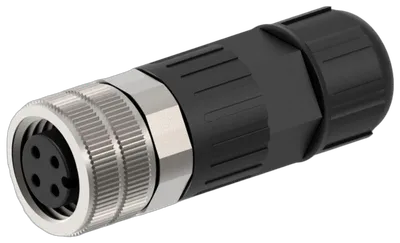
- TELTONIKA NETWORKS M12 A type 4-PIN female connector€7.70excl. VAT
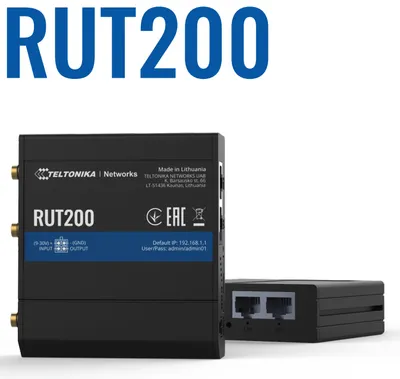
- Teltonika · Router · RUT200 · Kompakter-4G/LTE Router · eSIM€108.50excl. VATRRP €114.68−5%
- Teltonika RUT955 Industrial 4G/LTE & WiFi Dual SIM Router€271.72excl. VAT

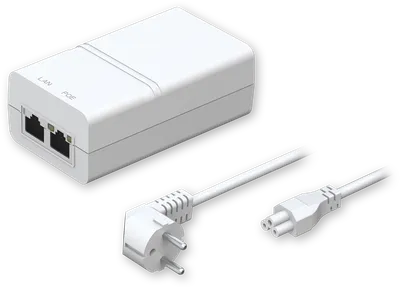
- Teltonika · Zubehör · Power · EU Single Port Gigabit Passive PoE Injector 30W€17.94excl. VAT